
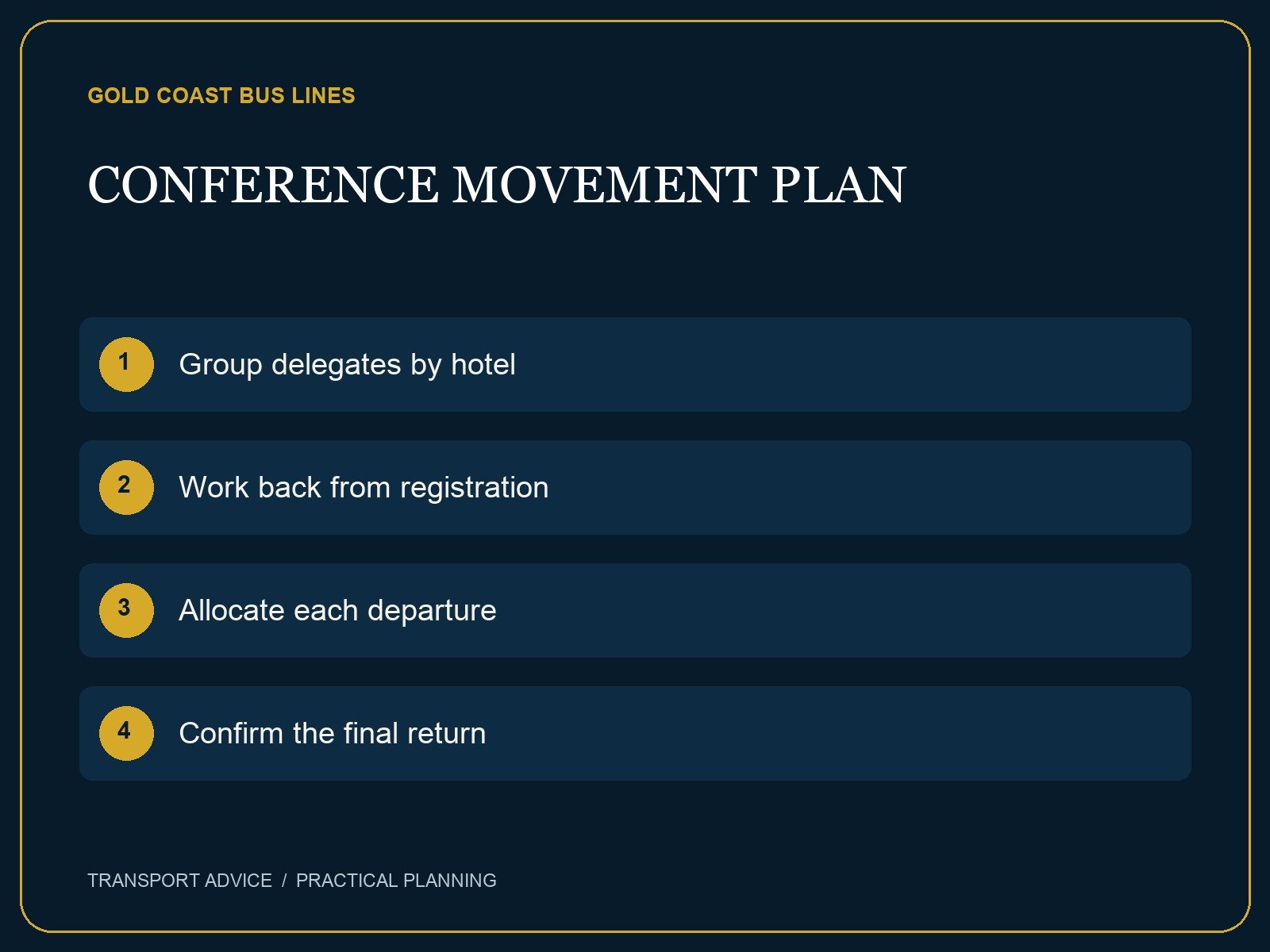
Planning corporate and conference group movements. This advice is designed to help organisers prepare a clearer transport brief before requesting a quote.
Map the delegate journey
A conference transport plan can begin before the opening session. Delegates may require airport transfers, hotel distribution, daily venue shuttles, partner-program transport, dinners and a final airport movement.
Combining these requirements into one transport brief makes it easier to identify peak vehicle demand and avoid isolated bookings that conflict with each other.
Use manifests and grouping
For larger delegations, manifests help allocate passengers by flight, hotel or activity. Vehicle numbering and clear signs can reduce uncertainty at airports and event venues.
Where flights are spread across several hours, staged transfers may be more efficient than keeping one large group together. Where many delegates arrive together, larger vehicles may simplify the movement.
Protect the conference timetable
Transport times should be based on when delegates need to be inside the venue, not when the session starts. Allow time for unloading, registration, security or walking from the drop-off point.
The same principle applies to gala dinners and off-site activities. A realistic loading window is particularly important when passengers are leaving several hotels.
Provide an operations contact
Nominate one person who can approve changes and communicate with the transport operator during the event. For multi-day programs, a daily movement sheet should reflect the latest confirmed schedule.
Include luggage, accessibility, branding/signage requirements and any VIP movements when requesting the quote.
Ready to turn the plan into a quote?
Send the passenger numbers, route, timing, luggage or equipment and any access requirements. We’ll assess the actual movement and match it to the appropriate transport.