
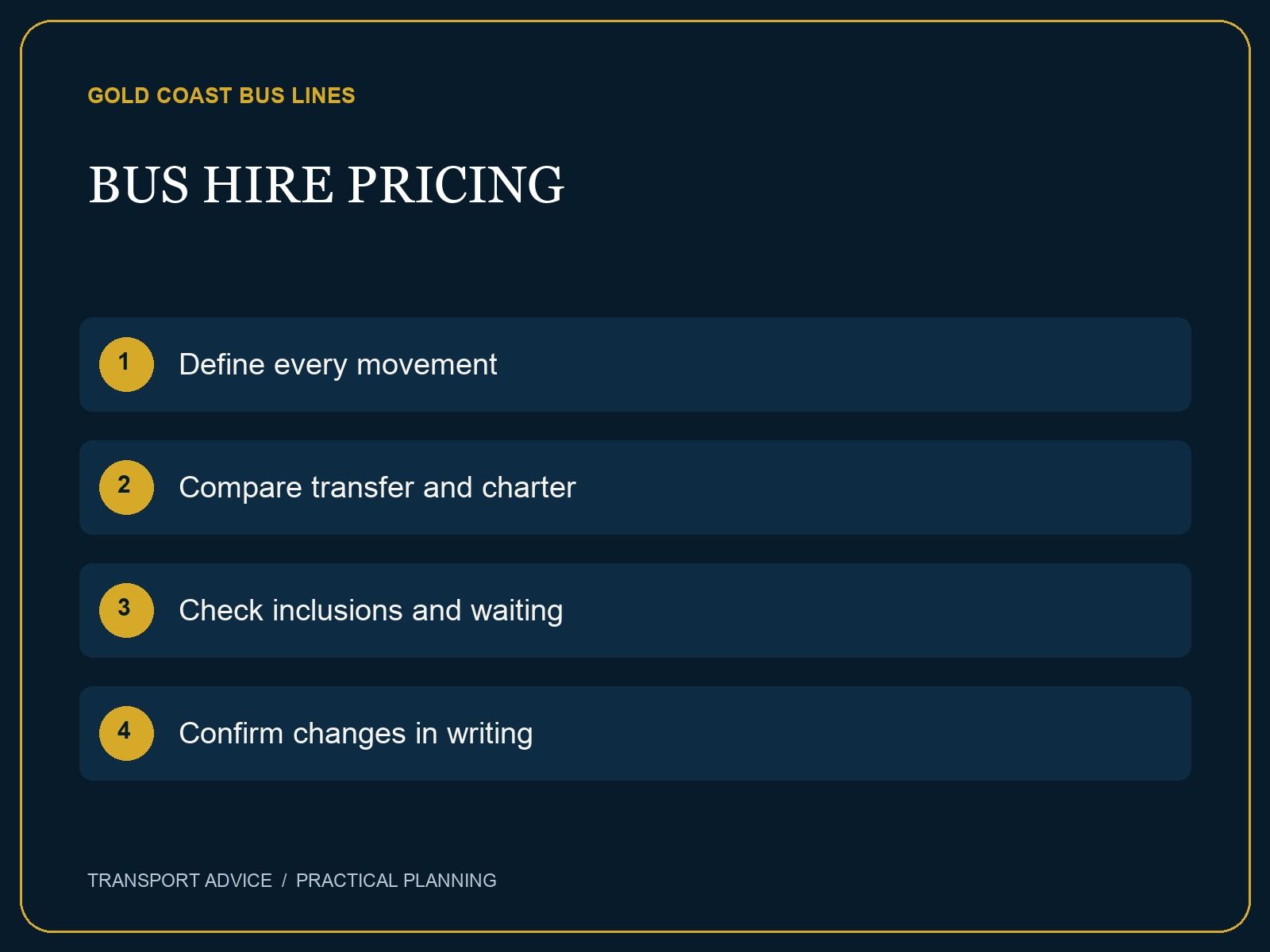
Gold Coast bus hire is quoted from the work required to operate the trip. The number of passengers matters, but it does not describe the whole job. A direct hotel transfer, a vehicle retained through a day of visits and several late-night return departures can involve the same group while requiring very different operating time and planning.
There is no fixed price in this guide because an unsupported headline rate would not establish what your itinerary costs. Instead, use the questions below to prepare a clear request and compare proposals on the same basis. The comparison covers hourly charter, defined transfers, waiting and multi-day work, with questions to help clarify what each proposal includes.
Why passenger count alone cannot set the price
The vehicle must suit passengers, luggage, equipment and boarding requirements, then fit the route and loading points. Twenty people carrying small bags may need a different arrangement from twenty golfers with clubs and travel cases. A constrained venue entrance can also change the workable vehicle choice.
The date and timetable matter too. A quote reflects the provider’s availability and the operating commitment for the agreed movements. Do not assume that two trips covering similar road distance require the same time, vehicle positioning or waiting arrangement.
Start with the fleet overview and the vehicle-selection guide to describe the requirement. Let the operator assess the suitable arrangement rather than requesting the cheapest seating category and adding important load details afterwards.
Hourly charter versus transfer pricing
A transfer usually describes a defined movement between agreed locations. It may include one pickup and destination or a specifically quoted sequence of stops. The vehicle may be released after the movement. A return transfer consists of agreed outbound and return work; it does not automatically mean the vehicle stays with the group in between.
A charter may commit the vehicle and driver to a longer operating period, several stops or an itinerary with waiting. An hourly structure, where offered, still needs a defined scope. Ask when charging begins and ends, whether a minimum applies, how additional time is measured and what is included. Do not assume the bill covers only the minutes passengers are seated.
Terminology can differ between proposals, so read the actual inclusions. A provider may quote a total for the complete programme rather than a public hourly rate. The useful question is what work the price covers and which changes would require a revision.
| Booking structure | What to clarify | Typical planning issue |
|---|---|---|
| One-way transfer | Agreed stops, timing and loading | Extra stops added after pricing |
| Return transfers | Both movements and time between them | Assuming the vehicle remains onsite |
| Hourly charter | Start/end basis, minimum and extra time | Treating waiting as free time |
| Day itinerary | Stops, finish and vehicle commitment | Open-ended additions to the programme |
| Multi-day work | Each day, overnight and positioning scope | Quoting only the passenger travel hours |
Use this comparison to decide which options to request, not to predict which must be cheaper. The operator needs the itinerary to assess workable alternatives and availability.
Describe waiting instead of leaving it implied
Waiting can occur while passengers attend an event, finish a meal, collect baggage or complete an activity. State whether the vehicle needs to remain available and whether passengers need access to stored belongings. These requirements can distinguish a retained charter from separate transfers.
Ask what waiting allowance, if any, is included for the particular service and what happens beyond it. Airports and cruise terminals have processes that can affect passenger readiness, but the booking’s response to delays still needs to be confirmed. Do not interpret a flight or ship reference as unlimited waiting.
If the finish is uncertain, provide a realistic range and explain who can confirm the actual departure. Ask the provider to state the assumptions used in the quote. A defined window is easier to assess than “collect us whenever we are ready”.
Give every stop and return its own place in the brief
Additional stops affect more than kilometres. Each can involve approach time, boarding, luggage handling and a changed route. A quote for one hotel pickup should not be compared with another quote that includes six hotels and a separate dinner transfer.
List outbound and return destinations independently. Some passengers may leave early, stay at the event or return to different accommodation. The multiple-pickup guide helps turn those details into a clear sequence.
For several vehicles, provide passenger allocations and shared deadlines. A shuttle proposal and simultaneous direct departures can offer different passenger outcomes. Compare the last arrival and final return using the one bus or multiple buses guide before deciding from the total price alone.
Check inclusions without assuming a standard package
Ask the provider to identify the vehicle arrangement, driver service, agreed movements, operating period and any stated waiting. Confirm whether the quoted total includes applicable GST and how tolls, parking, venue or terminal access charges are treated. These are questions to settle in the proposal, not claims that every charge applies to every trip.
Where a trailer or additional vehicle is needed, make sure it appears in the accepted arrangement. If the trip spans several days, ask which overnight, positioning or other operating requirements are included. The multi-day charter page is the relevant service starting point for those programmes.
Check which details remain provisional. A quote based on an estimated passenger count or unconfirmed venue access may need review when those facts are settled. Ask how long the proposal is valid and what action confirms the booking and vehicle allocation.
Compare complete proposals side by side
Prepare a simple comparison using the same itinerary version. Record total price, vehicle requirement, usable capacity, luggage, stops, departure and arrival assumptions, waiting, return and unresolved exclusions. Ask for clarification where a field is missing rather than filling it with your own assumption.
A lower total can reflect a different scope, such as one pickup instead of several or a released vehicle instead of a retained charter. It can also be a valid lower-priced proposal for the same work. The comparison should establish which is true before the organiser chooses.
Avoid dividing by passenger count until the full price and attendance assumption are clear. A per-person planning figure is the accepted total divided by the number sharing it; it is not necessarily how the service is priced. If attendance falls, the vehicle commitment may remain the same.
Worked scenario: a fixed dinner versus an open afternoon
Consider 28 guests going from one hotel to dinner and returning at a confirmed time. A proposal for two defined transfers can be compared with an option retaining the vehicle, if the operator offers both. The organiser asks what happens between movements and whether guests need access to any stored belongings.
Now consider the same 28 guests visiting several locations with an uncertain lunch finish and a possible extra stop. That is a different operating brief. The organiser lists the confirmed stops, identifies the optional one and gives a finish window. The provider can explain whether an hourly or other charter structure suits it.
The passenger number has not changed, but the work has. Comparing these two jobs through a single assumed “bus price per head” would hide the differences that the quote needs to address.
Reduce avoidable cost by simplifying the actual plan
If the organiser has flexibility, ask the provider what changes might simplify the service. Examples include consolidating suitable nearby pickups, removing an optional stop or agreeing one return instead of several. Each change should still meet passenger needs and the event’s deadline.
Do not choose a smaller vehicle if it cannot accommodate the confirmed load, or remove arrival contingency simply to shorten the quoted period. A proposal that no longer fits the trip is not a useful saving. Compare realistic alternatives and explain any extra walking or waiting to passengers.
For a group with different deadlines, a separate small movement can sometimes make the main route simpler. Ask for the option to be assessed rather than assuming that either more or fewer vehicles must cost less.
Confirm changes, overtime and cancellation terms
Read the proposal’s conditions for itinerary changes, additional time, payment, deposits and cancellation. Ask questions before accepting if the event could run late or attendance is uncertain. This guide does not set Gold Coast Bus Lines’ booking terms; the terms supplied with the actual booking govern that arrangement.
When a material detail changes, send the revised itinerary and obtain confirmation. Additional stops, extra luggage, later finishes and different destinations can affect the vehicle plan as well as the total. A change sent to the organiser’s passenger chat has not reached the transport provider.
Keep the accepted proposal and final movement schedule together. That gives the organiser a clear reference when checking the service, explaining the budget or handing responsibility to another person on the day.
Prepare the enquiry that produces a useful answer
Send the date, passenger count by leg, exact addresses, required arrival, proposed departure, stops, return, luggage and boarding needs. State which times are fixed and which are flexible. Include venue access information and an estimated range where a detail is not yet final.
Use the quote information checklist for a reusable enquiry structure. Then request a quote for the actual itinerary. The Gold Coast bus hire page explains the service context, while this guide remains the place to compare pricing structures and scope.
Frequently asked questions
Is hourly charter cheaper than return transfers?
There is no universal answer. It depends on the operating period, waiting, stops, vehicle requirements and availability. Ask for comparable proposals covering the same itinerary and confirm whether the vehicle remains committed between movements.
Does the quoted time start when passengers board?
Do not assume that. Ask the provider to explain the charging basis and any minimum or positioning allowance in the proposal. The accepted quote should make the scope understandable.
Are tolls, parking and GST included?
Check the actual proposal. Ask the provider to state how applicable taxes and route or venue charges are treated so totals can be compared consistently. This guide does not invent a standard inclusion policy.
Will fewer passengers automatically reduce the price?
Not necessarily. The same vehicle and operating commitment may still be required. Advise the provider of the revised count and ask whether it changes the suitable arrangement or quote.
Can we add time or another stop on the day?
Request approval through the booking contact. Availability, access, driver requirements and any revised price need to be assessed. Extra work is not automatically included because the group is already travelling.