
Transport planning for film and production schedules. This advice is designed to help organisers prepare a clearer transport brief before requesting a quote.
Production transport follows the call sheet
Film and television movements are rarely a simple morning pickup and afternoon return. Departments can have different call times, cast may move separately, extras may require bulk transport, and wrap times can change.
A useful transport plan mirrors the production schedule with defined hotel, studio, unit base, location and airport movements.
Use the right vehicle for each movement
Not every movement requires a large coach. Executive vehicles can suit individual cast or VIP movements, people movers and minibuses can cover smaller departments, while coaches can move larger crew or extras.
The fleet mix should be based on passenger numbers, luggage or equipment, access and the timing of each run rather than applying one vehicle type to the entire production.
Plan for change without creating confusion
Production schedules move, but transport changes should still pass through a clear contact or transport coordinator. Updated pickup times, passenger lists and locations need to reach the relevant driver and passengers.
For recurring hotel-to-studio shuttles, establish the base pattern first and then identify exceptions such as location days, split calls and airport arrivals.
Quote the production pattern
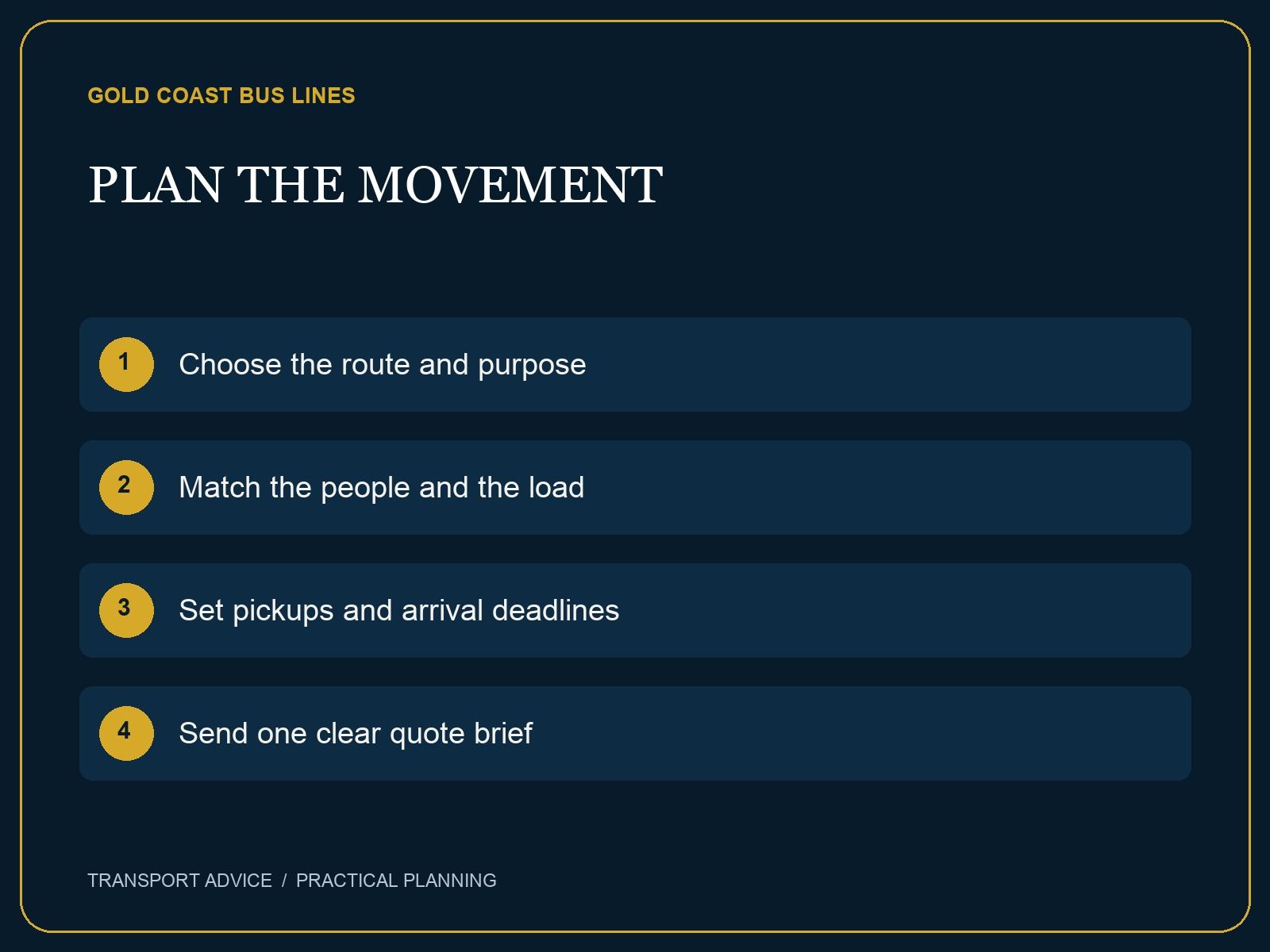
Provide expected production dates, approximate passenger numbers, accommodation, studio or location areas, call-time patterns and any known airport movements.
Gold Coast Bus Lines can then assess recurring shuttles, cast transport, crew movements and larger extras requirements as connected production logistics.
Ready to turn the plan into a quote?
Send the passenger numbers, route, timing, luggage or equipment and any access requirements. We’ll assess the actual movement and match it to the appropriate transport.