
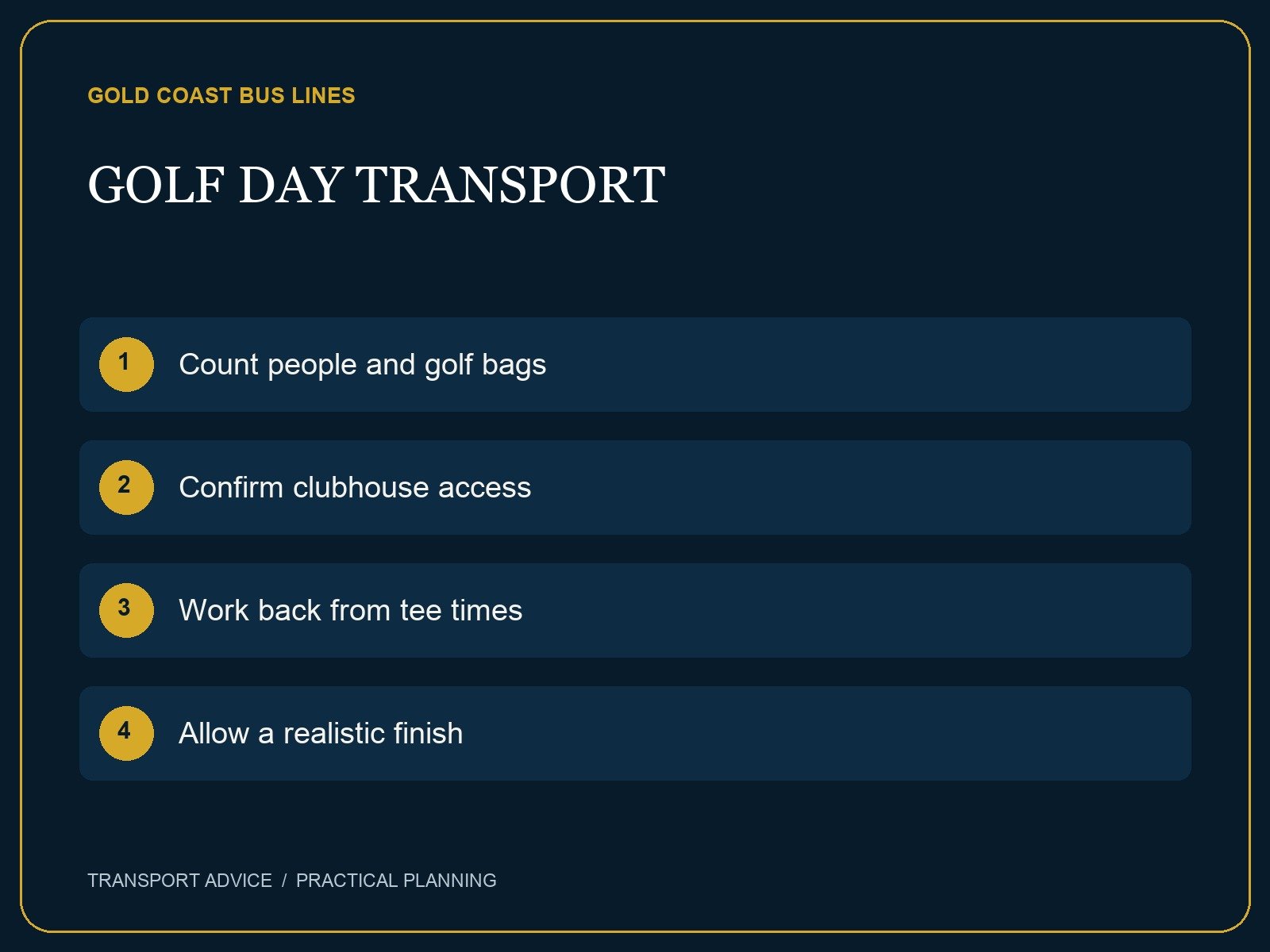
Golf transport is not simply a passenger transfer with a few extra bags. A group can arrive with golf bags, rigid travel cases, suitcases, push buggies and personal items, then expect everything to fit a vehicle selected only by seats. The best time to discover a storage problem is while preparing the quote, not outside the hotel on the morning of the round.
Build the transport plan around three things: the complete load, the course’s arrival requirements and the likely finish of the last playing group. This guide helps organisers prepare single rounds, corporate golf days and multi-day visits without promising an unrealistic departure or relying on unconfirmed luggage capacity.
Make an equipment inventory first
Count golfers and non-playing guests separately, then list golf bags, hard travel cases, suitcases and other bulky items. Clarify whether bags remain inside travel cases during the day. An empty rigid case still takes space, and a guest arriving directly from an airport may have substantially more luggage than a golfer leaving a local hotel.
Include push buggies, mobility aids and event equipment where relevant. Ask guests for dimensions or photographs of unusual items through the organiser’s chosen contact channel. A description such as “standard clubs” is less useful than knowing how many large cases and additional bags must travel.
Send the inventory to the operator before choosing from the fleet. A 33-seater coach may be worth discussing for some groups, but nominal seats do not establish golf-bag capacity. The provider needs to confirm the actual storage arrangement and whether another vehicle or a trailer is appropriate.
Work backwards from the course’s arrival requirement
Ask the course when the whole group should be ready, not only when the first tee time begins. Guests may need to check in, collect hire equipment, organise carts, change shoes or attend a briefing. The course should advise its own requirements; the organiser then allows transport unloading and walking time before that point.
For consecutive tee times, identify the final playing group as well as the first. A common departure after the round must account for everyone finishing, returning equipment and collecting belongings. Do not set the bus pickup solely from the first group’s expected completion.
| Planning detail | Information to obtain | Effect on transport |
|---|---|---|
| Tee allocation | First and last tee times, or event format | Arrival and likely return window |
| Course check-in | Required readiness before play | Latest workable drop-off |
| Equipment | Bags, cases, buggies and personal luggage | Vehicle and storage assessment |
| Clubhouse access | Approved loading point and waiting | Safe unloading and collection |
| Post-round plans | Meal, presentation or immediate return | Vehicle commitment and timing |
Avoid quoting a universal round duration in the passenger instructions. Course conditions, group format and pace can vary. Discuss a realistic collection window with the course and operator, and decide how the organiser will update the provider if play runs behind.
Verify clubhouse access and bag handling
The course should nominate a suitable place to unload people and equipment. A passenger-car entrance or cart staging area may not accommodate a coach. Confirm the approach, turning, overhead clearance and whether the vehicle can wait or must leave after set-down.
Arrange for the organiser to identify bags as they come off the vehicle. Labels should help return belongings to the correct passenger without displaying unnecessary personal information. Keep walkways and vehicle movement areas clear while bags are being sorted.
Ask how wet or dirty equipment should be prepared for the return and follow the operator’s loading instructions. Secure storage is the driver’s responsibility to assess; guests should not place equipment in aisles or assume an empty passenger seat is a suitable luggage solution. The vehicle-selection guide explains why the full load matters.
Decide whether to retain the vehicle or book transfers
If the day consists of a hotel-to-course journey and a later return, ask for a clearly defined transfer arrangement. If the group needs equipment access during the day, several courses, a sightseeing stop or an uncertain finish, explain that before requesting a charter option.
A vehicle that leaves after drop-off is not an available locker outside the clubhouse. Confirm where travel cases, suitcases and valuables will be held, and what the course can accommodate. Do not leave luggage in the plan as an unanswered question because it is unrelated to the golf itself.
The existing bus hire pricing guide compares transfer and hourly or longer charter structures. Ask what happens if collection is delayed, whether waiting is included and whether an amended finish requires approval. No arrangement should be inferred from the fact that a return trip appears on the quote.
Keep hotel pickups efficient
A group staying across Robina, Broadbeach and other areas needs a route based on actual addresses. Send passenger and bag counts for each hotel. A pickup taking only a few passengers can still need meaningful loading time when everyone brings a golf bag and suitcase.
Confirm whether guests meet in the lobby or directly at an approved loading area, and make the distinction clear. Hotel checkout, breakfast and bag collection should finish before the assembly time. The driver’s arrival should not be the signal for passengers to go back upstairs for their clubs.
If the route becomes too long, compare a central pickup with separate vehicles. The multiple-pickup guide helps structure stops, while one bus versus multiple buses covers different deadlines and passenger groups.
Plan a fair and workable return
A single return is simple if the group finishes together and accepts the same post-round schedule. When tee times are spread out, early finishers may wait a long time. Ask whether guests prefer a shared meal, a defined departure or a separately quoted early movement.
Do not promise a second departure until it is booked. A small early group may need a separate vehicle, and moving golf bags between vehicles introduces another handling and capacity check. Record who travels on each departure and what equipment goes with them.
For a presentation or lunch, allow time after the formal finish for passengers to gather bags and reach the vehicle. The organiser should confirm the group is ready before directing loading. A departure message needs an exact point and time rather than “after presentations”.
Worked scenario: 24 golfers arriving with travel cases
Imagine 24 golfers leaving Gold Coast accommodation for a round, then continuing to another hotel. Each has clubs, a rigid golf travel case and a suitcase. A 24-seat vehicle selected from a passenger count alone would not be a confirmed solution for that combined load.
The organiser prepares an inventory and asks the operator to assess a suitable vehicle and any additional storage arrangement. The course confirms its coach loading point and readiness time before the first tee. The second hotel confirms where luggage can be unloaded when the group arrives.
The return is actually an onward transfer, so the quote lists the new hotel rather than repeating the morning pickup address. If guests wish to eat at the clubhouse, that finish window is included. The provider can then price the whole day’s work and explain the consequences of a later collection.
Multi-day golf trips need a movement schedule
Use one row per journey, including airport arrival, each course, accommodation changes, dinners and the final departure. The luggage load can change between days: cases may remain at the hotel on one day but travel on checkout day. State the load for each movement instead of copying the same assumption everywhere.
Check how the group will handle changes to tee times. A course may offer a different start, but that does not automatically mean the transport can shift. Confirm the revised schedule with the provider before accepting it on behalf of the group.
Use multi-day charter when the proposed programme needs transport across several days. Ask whether the arrangement covers only scheduled movements or a longer vehicle commitment, and whether overnight or repositioning requirements are included in the quote.
Agree on weather decisions and passenger communication
If a course changes or cancels the round, the organiser needs one contact for the course and one for transport. Confirm the booking’s change and cancellation terms separately; an activity cancellation does not by itself establish what happens to the transport booking.
Prepare an alternative only when its access and timing are workable. A spontaneous sightseeing tour may require different routing, waiting or driver arrangements. Ask the provider to assess an alternative before telling passengers that it is included.
Send a concise passenger brief with pickup time, loading point, luggage expectations, course readiness requirements and return arrangements. Ask guests to report changes to equipment or attendance before the agreed final confirmation. One additional bulky item can matter even when there is still a spare seat.
What makes a golf transport quote useful
Provide the date, passenger numbers, exact hotels and courses, first and last tee times, required course arrival, equipment inventory, post-round plans and onward or return destination. Mark fixed commitments and uncertain finish times separately. Include assistance needs and any venue restrictions already known.
For organised sporting groups, start with sporting event transport; smaller social groups can use private group transport. Request a quote with the equipment details so the proposal addresses the trip that will actually take place.
Frequently asked questions
Does a seat count tell us how many golf bags fit?
No. Storage varies with the specific vehicle and the rest of the load. Give the operator a full inventory, including travel cases and suitcases, and obtain confirmation of the arrangement.
Can the vehicle wait while we play?
It depends on the accepted booking and the course’s parking arrangements. A return transfer may release the vehicle between movements. Ask explicitly if you need the vehicle or stored equipment available during the round.
What if our round finishes late?
Use the agreed organiser contact and advise the provider as early as possible. Waiting, a revised departure and vehicle availability depend on the booking conditions; extra time should not be assumed.
Can non-golfers travel with us?
Include them in the passenger count and describe any separate activities or return needs. If their schedule differs, an additional movement may be required, with its own access and capacity check.